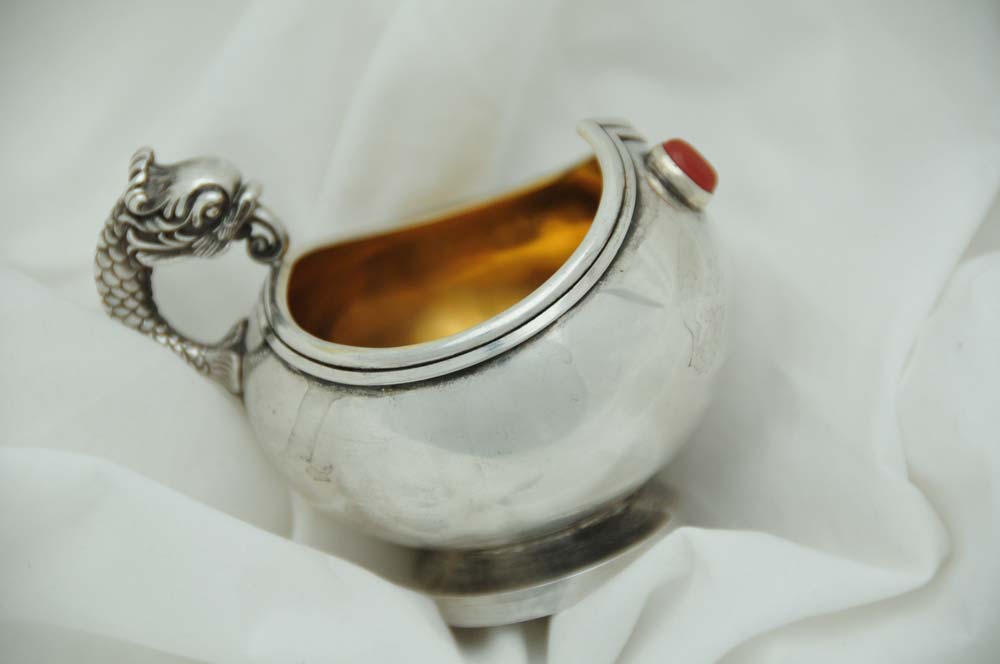
Silverware: a brief introduction
Silverware is a fine art based on the manufacturing of a shiny metal called silver, used by artisans and silversmiths to produce precious objects mainly intended for dinner set and interior design.
Origins
The discovery of silver and its consequent manufacturing took place several centuries ago: silver mining began during the Bronze Age and the first vases date back to the Sumerian civilization. From that moment on silver, considered the most valued metal after gold, has been used by many cultures as decoration or matter for tools, but also as coin for coinage. Due to its shiny aspect, Greeks call it argyrion (from argòs, which means “shiny, white”) and the word is preserved almost intact nowadays.
Modern era
In the XVI century with the discovery of huge mines of Potosi and Zacatecas in South America, silver spread exponentially and at the same time had a strong devaluation. In spite of this, in the modern era, silver retained its traditional royal connotations that pushed the great imperial courts in Europe and elsewhere to take the best silverware in order to adorn their sumptuous residences. In this context, some of the greatest silversmiths tied their fortunes to a particular court or nation: this is the case of Fabergé in the Russia of the Tsars.
Technical evolution
Thanks to its unique flexibility, silver was processed manually until the Industrial Revolution, period of gradual change of the technique: from simple tools, such as hammers of various shapes and chisels, to machines such as lathes and presses. In the same period began the activity of companies that produced prefabricated parts of teapots, coffee pots and other molding or casting mass-produced objects.
Even today silver, thanks to its beauty and sheen, is used by silversmiths from all over the world for the production of coins, silverware, pottery, jewelry and more.